Beyond Safety: Trauma-Awareness and Decolonisation in Movement Education
by
Centred Space
Why We're Here
Trauma-informed principles were first introduced in healthcare settings, specifically around informed consent and body respect, and it is only in recent years that this paradigm has started trickling down to the world of wellness, fitness and movement professionals. This is to be celebrated.
As a society, we cannot ignore the impact of trauma on individuals and groups; for somatic and movement professionals, it is even more critical for us to be up-to-date with the latest trauma research, and how it reframes our teaching approaches.
A trauma-sensitive and/or trauma-informed approach is often found in more clinical settings, where the probability of increasingly complex forms of trauma may be higher than in other spaces. This is not always the case for many of our general movement and wellbeing-focused classes.
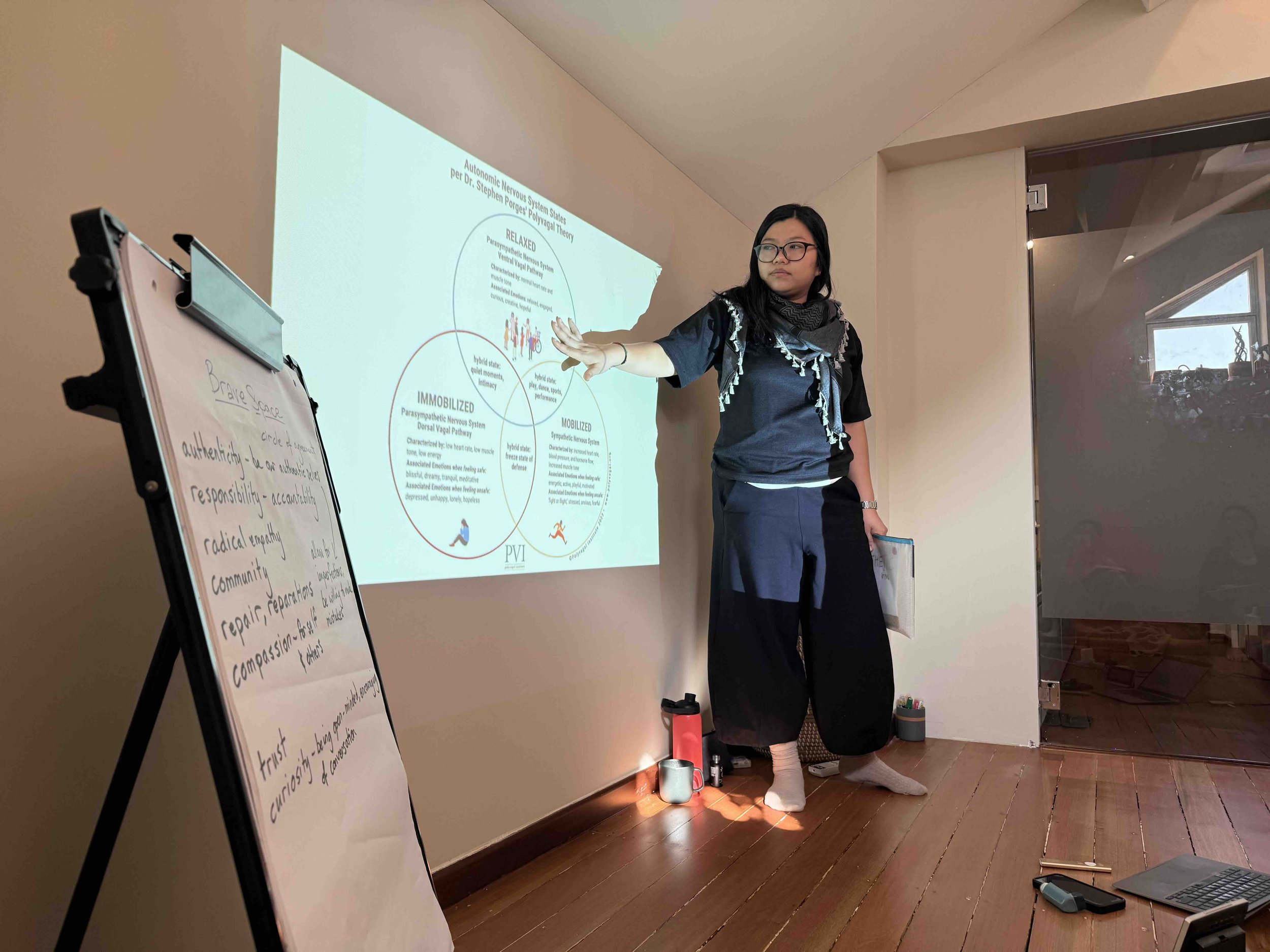
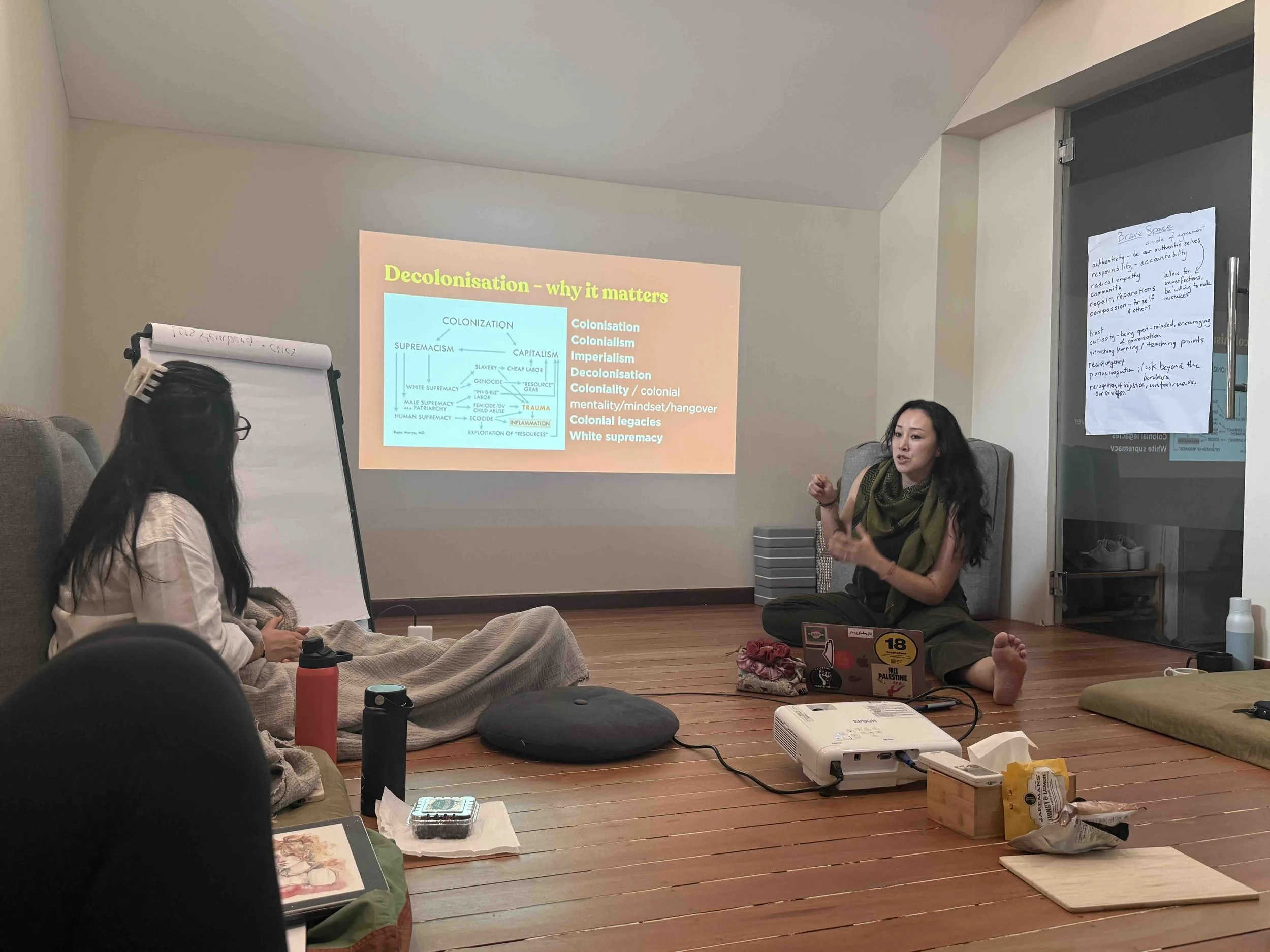
Our decolonised trauma-awareness approach centres the realities most movement and wellbeing professionals encounter: non-clinical spaces, whether teaching medium to large groups or working one-on-one.
It invites us to reflect deeply with questions such as:
- Who in the room carries the greatest needs?
- Who holds power, and how is it exercised?
- Where might my own biases shape the experience?
Additionally, we need to consider contextualising trauma-awareness within the wider discourse of decolonisation. Decolonisation serves as a framework for us to critically examine the colonialist nature of numerous trauma theories today, and invites us to consider a country's culture as an important lens, from which to view and practise our teaching skills.
Syllabus
1. Understanding Trauma
Current theories & relevant research
Applicable trauma theories in movement and therapy spaces
Key elements of Trauma-Awareness and how it is distinct
Group safety in movement and therapeutic settings
2. Power & Abuse
Why do we need to talk about power?
Understanding power dynamics in the teaching/learning/therapy space
Words matter: the importance of language and how we use it
Case studies
Red flags: cult(-like) dynamics and how to notice / move away from them
3. Decolonisation in Practice
TA & recognition of identities
Cultural appropriation & decolonisation in movement and wellness spaces
Intersectionality & its significance within the wellness and movement community
Reflective practices
4. Teaching Methodology & Practicum
Cueing, prompting and speaking
Design and sequencing
Hands-on work
Course Details
Date: 26 & 27 September 2026 (Saturday & Sunday)
Time: 8:00 a.m - 6:00 pm each day
Venue: Pilates BodyTree (Chinatown Point Studio)
Address: 133 New Bridge Rd, #20-06, Singapore 059413
Fees
Regular: S$1000
Early Bird: S$850 (Use code BTACSEB2026 when checking out)
Alumni: S$765 (must have attended Centred Space course(s) previously. Email info@bodytreeacademy.com for payment details.
Cancellation Policy
The programme does not give any refunds or credits after enrolment is confirmed. As training spaces are limited, we ask that you ensure your availability to attend before committing to the course financially.
The programme reserves the right to cancel any training before it begins. In that case any payments applicants have made will be refunded in full.
Trainers

Dewi Chen (she/her) Dewi is a certified yoga teacher, teacher trainer, manual therapist, and doula. She was the founder of Terra Luna Yoga, Singapore's first trauma-aware yoga and movement studio. Her calling in to the world of trauma-informed practices began as a personal journey at first, having been subject to abusive teachings and sexual assault within the yoga community. She then undertook more professional trainings in the field, from Trauma-Sensitive Yoga, Clinical Applications of Polyvagal Theory, Perinatal Mental Health, and several other related workshops.
Her yoga certifications are in Hatha Yoga, Yin Yoga, Pre/Post-natal Yoga, Restorative Yoga, Well-Woman Yoga & Therapy, Yoga Nidra, and Kids & Family Yoga. Outside of yoga, Dewi is also trained as a Barefoot Training Specialist® and BARE® workout instructor.
Drawing inspiration from her own experiences and her love for applied physiology, Dewi is a trained manual therapist and bodyworker. Seeing the body through a therapeutic lens not only aligned with her philosophy on trauma-awareness, it provided the necessary tools on how best to offer hands-on assists in movement classes.
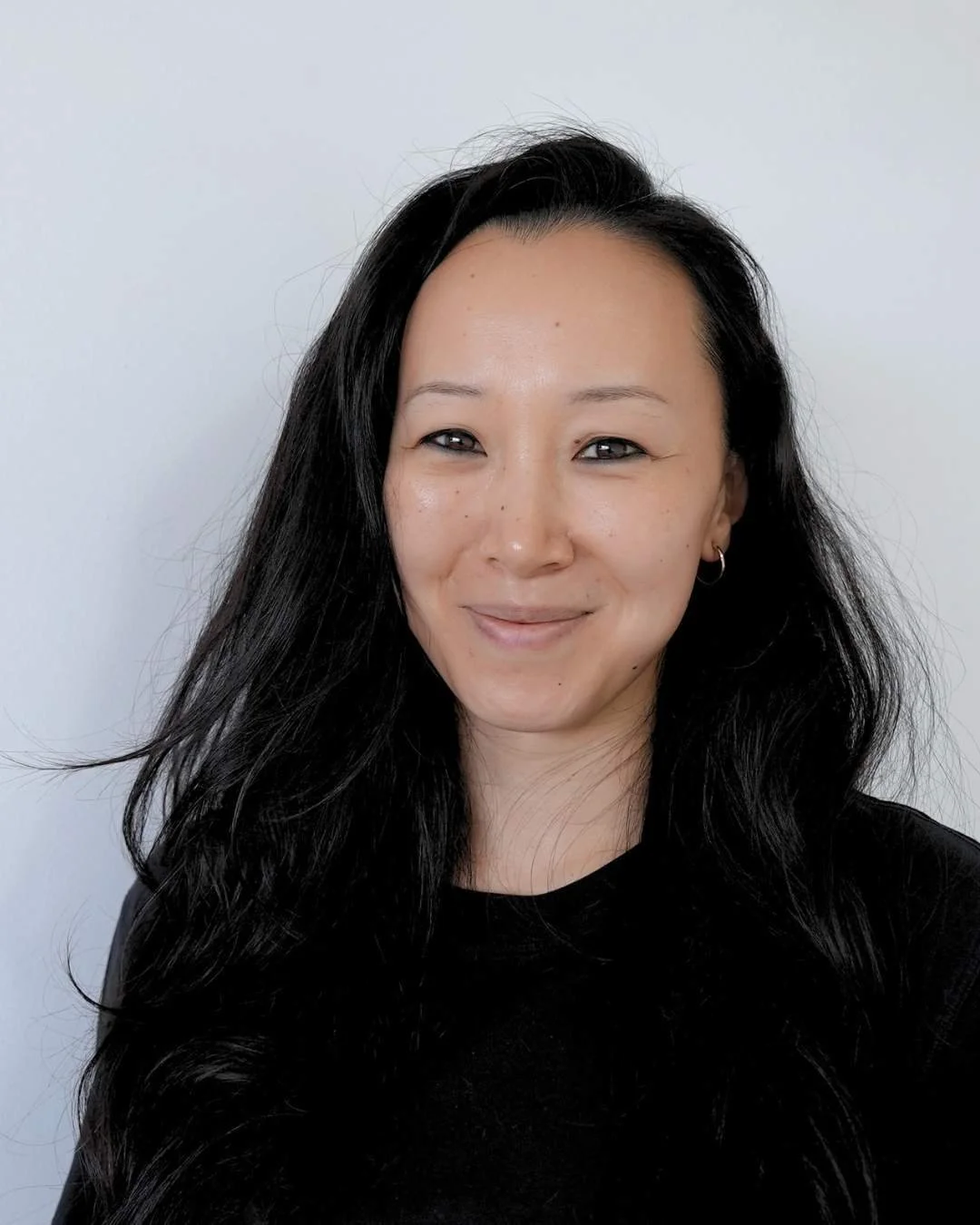
Jennifer Tan (she/her) has been in education of various kinds for the past 19 years, from more academic settings, to CrossFit coaching and Yoga teacher training. Specific to yoga, she has taught various styles, trained in specialised areas such as applying accessibility and trauma awareness to the teaching sphere, and eventually placed much of this learning in her teaching and training of Restorative Yoga; this has nourished Jen’s eight-year-long (and counting) relationship with her teacher, Judith Hanson Lasater, who she assists both in-person and online.
Complementary to her teaching years lies her experience in curriculum development, which has recently culminated in the co-writing/leading of a 200h Yoga Teacher Training and the writing/leading of a 50h Restorative Yoga Teacher Training, as well as the continued development of what is now Centred Space's Trauma Awareness & Decolonisation CET. Thanks to her own journey of unlearning, these trainings increasingly seek to bring to the forefront topics such as intersectionality and the importance of decolonising our movement practices.
All of Jen’s classes are invitational and curiosity-driven, with the hope of finding ways to move and rest our bodies with confidence and compassion.
Frequently Asked Questions
-
This course is for anyone who serves in the field of movement education, therapy, and healthcare, as well as curious individuals interested in learning how to apply a trauma-aware and decolonised lens to their own journeys.
-
There will be a documentary film that we encourage all participants to watch before the course commences, and this is entirely optional.
-
Yes, definitely! We find that even in the field of mental healthcare and trauma-informed yoga teacher trainings, there can be gaps in the understanding of how we can be more trauma-aware, especially when it comes to verbal and body language, cultural sensitivities, LGBTQIA+ awareness, etc. In many trauma trainings, there can be a lot of emphasis on the theory of trauma, and when it comes to applications, we find that a nuanced and contextualised approach that considers identities, intersections and collective care, is not often spoken to. Additionally, decolonisation as a starting point for mental healthcare practitioners is rarely included in many trainings around psychotherapy, and we hope that this CET is a stepping stone towards having more conversations that centre this.
-
Hear Dwi’s and Jen’s Dialogues on Trauma-Awareness & Decolonisation here.
-
70% of the course will be theory, discussion and reflective exercises, with 30% dedicated to hands-on work and physical movement.
-
There are no assignments to be handed in to complete the course. We will offer a detailed reading list and extra-curricular resources to help support your continued learning after the course.
-
We will speak to this directly, as it is so often the case that we find the capacity to apply trauma-aware techniques, but the discomfort of decolonising one’s practice can serve as a deterrent. This training is not about leaving the two days and being able to say we are trauma-aware and decolonised in what we do, but rather, opens the gateway for us to explore how we can make changes and adjustments to our work, in order to better serve and honour those for whom we hold space. It is not always the easiest of journeys, but it is certainly a fruitful one.
-
Yes, we can arrange for a complimentary discovery call with the host & facilitators of the course. Please arrange a discovery call by emailing us at hello@centredspace.co